Greening the Noog
Last night was 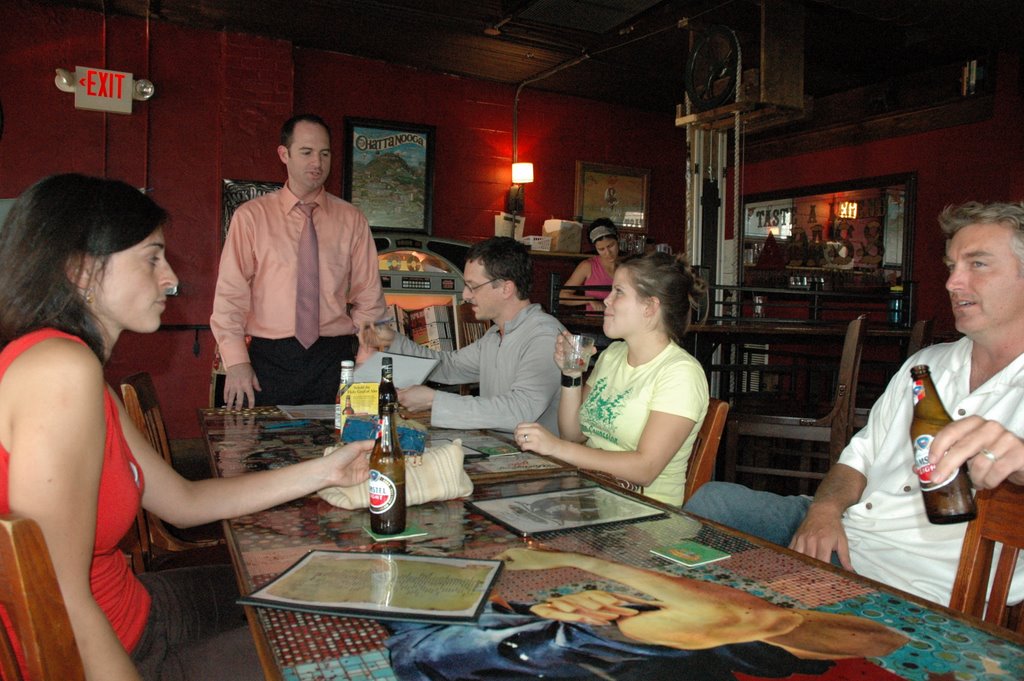
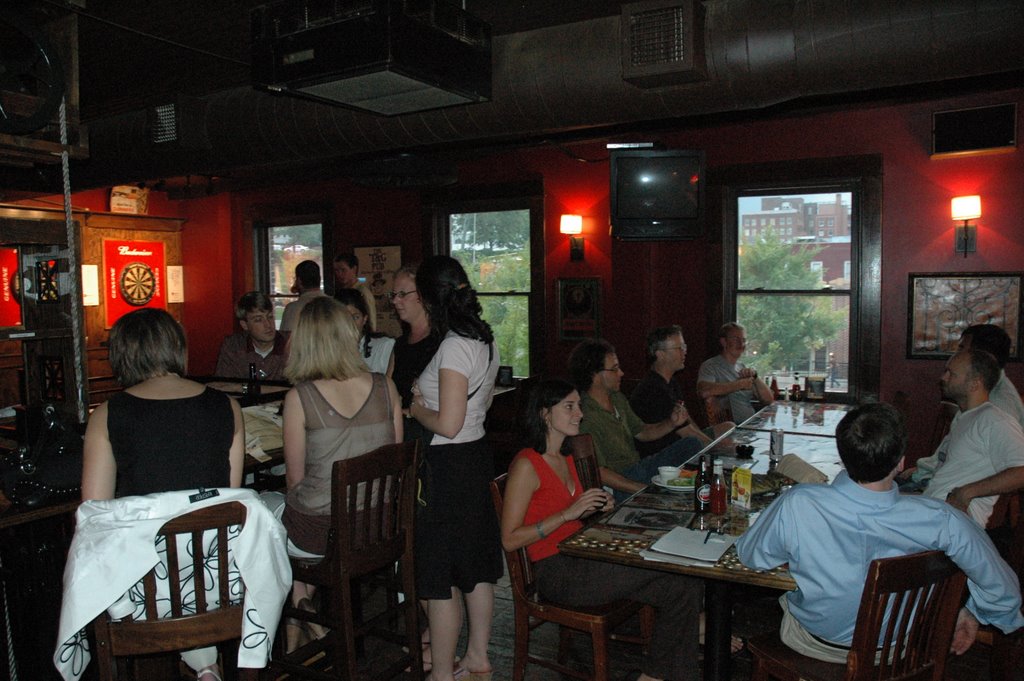
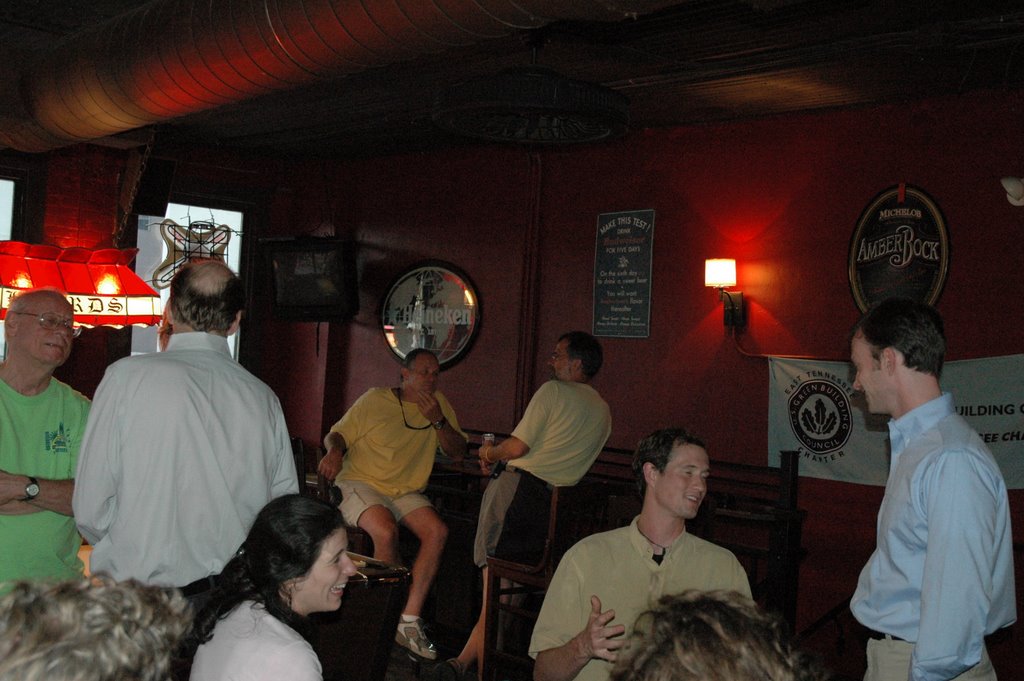
Last night was

In March of this year Bicycling magazine ranked
I lived in
Recently some friends and I had a discussion about bike safety in our car-obsessed society. The conversation started because of a fatal accident that involved a bicyclist and a car. One of the points made: “ I’m suggesting that we as a society did something wrong when we decided (and are still deciding, since about 1945) to start building roads exclusively for fast-moving cars...A road in which cars are comfortable driving at 50 mph is by my inclination NOT exactly a good place for a bicycle - and that’s the problem. It’s a dangerous place - a place where people get killed. Why should I as a cyclist or pedestrian be trapped to only certain roads? If I want to go to the Save-A-Lot or the Kwiky Mart, I either have to own a car or risk my life.”
States' spending of Federal Funds, National Average:
Highways & Bridges = $72 per person
Pedestrian Projects = $0.55 per person
While one might argue that if a cyclist wants to ride on a road where the speed limit is 50mph then that cyclist should know the “rules of the road,” but shouldn’t drivers know how to “share the road?” Below are excerpts from TN Code and Drivers Manual:
History

[Acts 1955, ch. 329, § 71; T.C.A., § 59-872; Acts 1989, ch. 591, § 113.]

55-8-172. Traffic laws apply to persons riding bicycles - Penalty.
Statute textCongratulations to our own Anj McClain, Tricycle Market Researcher and contributor to this blog. Last week she took and passed the Leadership in Energy and Environmental Design (LEED) Accredited Professional exam!

Beck wants you to lay out his new album cover. At least, your copy of it.
Read the whole story about a new level in customization/ personalization of CD art. Or visit the man's website for lots of Beckian ephemera.
 “Sound Off” is an op/ed post by editors of the Tricycle blog. The opinions may or may not reflect those of the Company.
Tricycle talks a lot about the “dematerialization of design.” As a sustainable design company, one of the things we bring to the table is a bag of digital tools that eliminate unnecessary waste in the design process -- not just literal landfill waste, but also wasted time, money and natural resources. If you want to read more on these tools then click this link... because what I want to talk about here is the why. Or the how. (Or the wow).
Digital tools to dematerialize design? Sounds future-y, even in a world where every day we use credit cards, camera phones and iTunes. And maybe a little scary... what’s going to be lost? Just because the creative process is evolving doesn’t mean we can automatically assume that things are evolving for the better. Sometimes slow is good, sometimes accidents and mistakes and inaccuracies redirect creative thinking so the end product is much better than it might have been otherwise. And isn’t the creative process supposed to be tactile and smelly, and all-around-more-rewarding because pencils are used instead of pixels?
Obviously, daily reality doesn't support any facile belief that tech brings salvation or that a peaceful world community is just around the next bend of what we once called "the information superhighway." But happy accidents can (and do) still happen in a digital design process too, because, after all, digital tools are exactly that -- tools.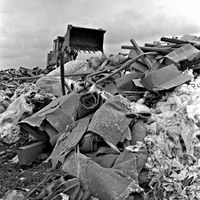 One thing that is indisputably taking place is that our everyday acceptance of digital tools is cultivating a new set of expectations. Things that were once laughably impossible are now normal: we expect our money, pictures and music to be sharp, accurate and quick. In the carpet industry, where we've spent so much time in recent years, we've used digital tools to erase wasted time and money, to use oil more responsibly, to conserve energy and water, to show that thousands of pounds of waste that would have gone to landfill do not have to be manufactured in the first place.
It's beautiful to watch benefits such as these move from celebrated “best practices” to becoming industry standards. Nothing more than the norm.
Has video killed the radio star? Maybe. But are other, new, great things coming about as a result? After all (quite ironically) that song's video was the first video ever played on MTV, at the moment of the channel's debut in 1981; 25 years later the evolution of music is still revising what it means to be a radio star via sites like garageband.com. Even talk radio has had a makeover: move over, Rush Limbaugh, to make way for Karl Pilkington.  For a parallel in design, witness Joshua Davis, a Pratt Institute trained illustrator who uses Illustrator® to create design elements such as trees, leaves, flowers... then brings an added layer to his work by coding programs to randomly generate artwork using the elements, based on mathematical algorithms.
The design of buildings, interiors, and products are by their nature focused on the material world. With digital design processes, the material world has expanded to include a tech-enabled immaterial, and new avenues for imagination are opening up because designers are finding themselves with more time and ability to explore creative options, as well as new types of creativity. Part of what has always made design interesting to me is its ability to tap the transcendent through (and only through) the concrete. This "immaterial" world is not the same thing as the transcendent, but perhaps immaterial tools can be used alongside material tools to bring us a bit closer.
And for those who resist? Who would favor an Agrarian-style return to pen and paper? Of course there's good to be found in those impulses, too; after all, revolution against design’s evolution is... well, part of design’s evolution.
Caleb Ludwick is Communications Director at Tricycle, Inc. He thinks it's hilarious that Vanderbilt has posted the Agrarians' work in a Virtual Reading Room (click above).
 With Major League Baseball’s playoff season heating up and the kickoff of both college and pro football seasons just around the corner, fans will be lining up at the gates of stadiums across the country. With ticket prices peaking to premium levels for even regular-season college football games, the price of seeing a game in a stadium can be daunting. But most fans in the stands or at home watching on TV don’t consider the environmental cost of sporting events.
According to the United Nations Environment Program, the amount of consumables used and discarded at a sporting event is staggering. At one European football (soccer for all you colonials) game, 10,000 to 20,000 cubic meters (eight Olympic swimming pools) of water and two to three million kilowatt hours of electricity (enough to power 500 to 700 European households annually) are consumed, while five to ten tons of waste are generated. Now, multiply that figure by the amount of games taking place on any given weekend in the fall across the United States, and the nation’s pastime begins to look a bit less benign than peanuts and crackerjacks.
The outlook isn’t hopeless, however. There are marked improvements in stadium designs, and with many of the stadiums constructed by educational institutions, it makes sense that they might begin embracing environmental design aspects not only for their environmental impact but also for their educational value. Take, for example, Oregon State where the Beavers completed a football stadium expansion that, while not LEED-certified, did take into account many sustainable design considerations in its construction. And, the UConn Huskies recently finished construction on the Burton Family Football Complex, a training facility that became the first LEED-registered complex in the NCAA.
The trend is expanding to professional sports as well. The Minnesota Twins expect to break ground this year on their new stadium which will aim for LEED certification. Likewise, the Washington Nationals plan to complete their LEED-certified stadium by spring 2008. While there were heated discussions as to whether the stadium would be LEED-certified, the tide seems to be moving in favor of certification, though probably not to the Silver status previously planned. With a total project cost of $611 million, the extra five to ten million dollars needed to reach Silver certification seems a small price to pay for the future economic, environmental, and social impacts certification could provide.
And the social impact of a LEED-certified stadium cannot be underestimated. Simply consider the audience a stadium could reach on an annual basis, through both game-day attendance and on-air broadcasts. With a potential audience of millions annually, the educational possibilities could do more for the environment than the stadium itself. Just imagine John Madden and Al Michaels discussing sustainable design and green roofing during a future Sunday Night Football matchup – now that’s something even Cowboys and Redskins fans could agree on.

If Don Quixote rode today, he just might ride a Novara touring bike. This re-rendering of my favorite Picasso is from a t-shirt I saw at our local farmer’s market. Spelled out in big letters across the back was the question: “What is Farmland Conservation?”
A strapping lad named Justin Ellis is on a mission to answer that question. Like so many of us, Justin was a suburban kid who woke up to the realization that his experience of American’s agriculture came on clearance racks and under supermarket cellophane... and that many rural communities live under pressure from cities that threaten to swallow them up. But unlike so many of us, he decided to bike across the country to find out more.
So he set off on a 4,000 mile research expedition. He is visiting 80 farms along the way, ranging from small sustainable farms to large industrial outfits. He works a few days at each, in an effort to better understand the ‘how’ and ‘why’ of their operations. Then he submits stories about each to the local community newspapers as well as his ongoing travel blog (Check it out if you're interested in organic farming, efforts to preserve farmland, or just becoming more conscious of what's in your refrigerator).
And like the man from La Mancha, Justin seems to be tilting at windmills but really takes aim at the assumptions we swallow in today’s America, subjecting even the food we eat to a dose of healthy questioning.
Michael mentioned this previously but here's a bit more about the world’s biggest design awards, which you might never have heard of... The goal of the INDEX: committees + judges is to spark awareness on the importance and potential of design by honoring design that improves life. Categories are Body, Home, Work, Play and Community.
Last time’s winners are:
BODY: LifeStraw™ which brings clean water to people in the third world, making people less dependent on others for safe drinking water.
HOME: Softwall dynamically partitions large open rooms and spaces into more intimate and personal surroundings of any shape
WORK: Fundación Española para la Innovación de la Artesanía, Spain improves networking among craftsmen and teach them new tendencies with tailor-made activities.
PLAY: Apple iTunes and iPod (no explanation required).
COMMUNITY: Architecture for Humanity, a nonprofit that promotes design solutions to global and humanitarian crises (which receives 50% of the sale of REVERB, a new book of sustainability essays by leading designers, edited by Tricycle).
Nominations close November 18.
And when you are invited to Copenhagen as a finalist, stay at what might be the hippest hotel in Europe.

CNet has an article about a new type of W Hotel named Aloft. Though Starwood has a general idea of the new design they haven't finalized the details. Rather they've had the project digitally constructed in Second Life and are letting online patrons iron it out… a charette of thousands discussing the structure, operations and events over virtual drinks in the hotel lobby. You can follow their progress here.
The Industrial Design Society of America asked us to submit a 30 second video about SIM for the IDEA awards… so we had some fun.
Thom Yorke's new album, The Eraser, contains a song called “The Clock” that suggests, among other things, political non-action regarding environmental policy. It's not new territory. I first became aware of Yorke’s concern for global warming in the deluxe packaging of Radiohead’s Kid A.  The CD is housed in a stylized “board book” filled with paintings of icy landscapes and cartoon bears floating on glaciers. The end page lists “Selected Examples of Ice Melt around the World,” and cites World Watch.
  Recently he’s been involved in a number of high profile, social activist activities for Friends of the Earth and Oxfam. Not quite Bono, but still an inaccessible star… I thought.
So I was intrigued and encouraged when I ran across an interview today from an Australian newspaper. His honesty resonated with me:
He's worried about being a spokesman for Friends of the Earth when he doesn't even put bricks in his dunny or recycle properly. "I have no integrity in these things, I haven't done enough," he laments. "I don't have solar panels on my house yet. I haven't sorted out the heating, my car's not a Prius, I f---ing fly all the time for my job and I hate it but at the moment I haven't really got a choice, you know, and all these things. The job I'm in is a job that wastes energy left, right and centre. It's madness."…and then this clarification from the Guardian:
This is what Thom Yorke, conscious rocker, is like. He's more confused student than celebrity spokesman. More pub ranter than soundbite-spewing talking head. He's more like most of us, in fact.It echoed something Holley Henderson, chair of LEED-CI, said in our book Reverb. After recounting a failed project scenario she said,"Not enough people talk about mistakes; nobody learns unless we are willing to reveal them… telling others about what you are doing — the successes and mistakes — is what multiplies your hands." We can easily get discouraged by our inability to change the world in a day. It’s a good reminder that “the sum of the parts makes the whole”. Every small action we take for climate improvement is significant, whether rock & roll or interior design. It's OK, Thom. You're multiplying hands.

Last week Lees Carpet officially relaunched Thought Patterns Remixed. Thought Patterns was one of our first on-demand SIM sites so it was fun to give it a mod facelift. The site now has over 200 patterns to choose from in 25 fresh color ways. We also redesigned the sample book in collaboration with a friend from VH1. Go on, make your mix.
Reduce, Reuse, Recycle…words that echoed in my first year as an environmental science student. It seems elementary at first but I quickly learned that these 3 words allow humans to arrive at a defendable conclusion of ways in which they might interact sustainably with the environment; and the best part is these words allow creativity. These w ords have reached many in the design industry and hopefully will continue to do so.
Last December I was lucky enough to take a road trip down to  d carpet tiles with the roof load transferred to metal posts running through the middle of the tiles. The carpet tiles were reclaimed from office buildings in the
Recently on Design ℮2, SINGLE speed Design’s Big Dig House was featured because of its use of over 600,000 lbs of recycled materials including concrete and steel. The reclaimed material was once a temporary ramp on I-93 while the Central Artery was being buried underground.
It is obvious to see that these are both creative projects, more creative than the average building. Perhaps designers who are creating a sustainable building have to be more creative. There are more limitations so the designer is forced to think outside the box.
 Each Spring I teach a class at the local university with another design colleague, Paul Rustand, called “Art 499: Professional Practices for Graphic Design”. Generally we try to bring the real world into the academic world and give the students a good dose of reality by creating complex projects and then connecting them to professional designers across the country for art direction and critique. For the final project of the Spring 2006 we collaborated with Joe Stitzlein, a Senior Design Director at Landor (Joe has since joined Nike). We decided to combine a few different projects from our various experiences into a fictional uberproject with the following Elevator Pitch:
A radical new technology platform from Herman Miller will allow their customers to create customizable flooring "experiences" through movable, technology enhanced floor textiles. This floor system can be customized in real time in the following ways: opacity, heat, illumination, "infused" audio and video, color, imagery and other experiential factors-many of which the engineers at HM haven't been fully determined.
ASSIGNMENT
Herman Miller wants you to create a story for potential investors that shows the probable cultural impact of such a product. This will be presented along with a financial model created by the HM executive team. You must figure out how to explain the occupational and social benefits of this new idea to a group of VCs that are not well versed in design history, the interiors industry, commercial carpet, interior designers or furniture manufacturing. Furthermore, the engineers at HM would like your expertise in creating emotional experiences (i.e. your expertise in being a creative designer) to help them expand the offerings and benefits of the Kinetic Floor System.

