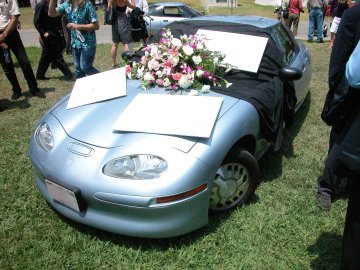
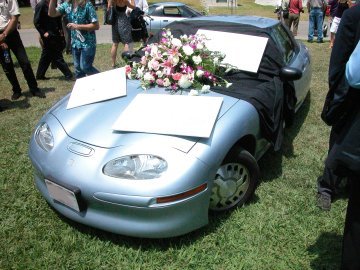
 The human drive for sustainability has a price . . . roughly $2.33 per gallon. Sustainable driving for humans might have a higher price tag, especially if it means the possible re-shuffling of the current transportation payout structure. So investigates a new documentary film titled Who Killed the Electric Car?
Our forefathers (well, more like our older brothers and sisters) had the pith to foresee the instability of the Middle East region, the finite nature of crude, and that the short term isn’t worth the cost to the long term. So, they invented an electric car specifically designed to reduce one of our major uses of fossil fuels -- local driving and commuting. Theirs was the type of invention that could hinder wars, save lives, catapult technology, and promote conservation. It was also the type of invention that could cost some industries their livelihood. The story of this invention (and its demise) can be seen at movie theatres nationwide; look for it at select theaters. If it isn’t in your area, it should be hitting Netflix before long.
After catching the flick, if you're so inspired, pick up the August / September edition of ReadyMade. There, they discuss converting vehicles from dino-diesel to the much more eco-minded (and hip) biodiesel. The rag even goes through the trouble of laying out blue prints for the construction of a filling station for your backyard -- for less than $600!

This is the view from the window in Tricycle’s executive offices, on the edge of Chattanooga proper. Our building is a reclaimed saddle factory (...and yes, our friends on the East/West Coasts can insert a joke about Tennesseeans not having cars here). The land pictured above is a brownfield site next door to us that, until recently, was Wheland Foundry and US Pipe.
Chattanooga is an old manufacturing berg, and in 1969 gained the (dis)honor of being named the dirtiest city in America by the EPA. Things were so bad that good ol’ boys tell of having to take a change of shirt to work, because during lunch the soot in the air turned their whites to grey; women tell stories of their nylon hose disintegrating when they stepped outside. But thirty years later Chattanooga is recognized as one of the greatest environmental turn-around stories in the US... read one former VP’s comments. What has happened here is a great example of what can happen when old money and new vision combine to reuse space in better ways.
A Southerner’s definition of “sustainable development” = Economic, heck yes. Environmental, damn straight. And social, thank heaven. One shining example of the ‘social’ are those brownfield facilities behind our offices. Legendary in the Southeast not only for their products but also their part in for making Chattanooga Creek one of the most highly polluted waterways in the region, they are being transformed. The US Pipe and Foundry properties have been sold and are being developed... and (hooray!) the developers have set aside 37 acres that were formerly a foundry landfill for greenspace.
Even better, they are ensuring that these acres don’t get sold and turned into townhouses a few years down the road by
1. donating them to a local foundation, which is reimbursing the developers for cleanup and remediation costs on that portion
2. making plans to heavily promote the space for tourism and wilderness tours, making the greenspace a permanent city asset
3. sending out a RFP to planning firms for ideas of how best to make the development work.

Two nice articles were recently written about us and offer insight into our history and future. Ruth Cartlidge penned a concise article about Tricycle's mission in Chattanooga's Commercial Network Magazine. Christine Whitmore wrote an interesting post about potential consumer applications for ZoomRoom on her blog, Flooring the Consumer.

In our second home of Leeds, Moose has left his mark by removing dirt or paper from surfaces with anti-grafitti — 100% VOC free. Check out his site and read up with NPR. Spotted by Cool Hunting.

This week Metropolis announces the 2007 Next Generation® prize. For the first time since the prize began four years ago it will have a theme, Energy: its uses, reduction, consumption, efficiencies, and alternatives. The competition recognizes design innovation on all scales and is open to young designers in practice 10 years or less, regardless of discipline or profession.
The winner will receive $10,000 seed money and will be featured in Metropolis magazine. I'm fortunate to join this year's judges which also include Jeff Barber, Gensler; Fred Dust, Ideo; Suzan Globus, Globus Design Associates; and Susan Szenasy, Metropolis. Here are the rules. Please enter!

If you're a designer and in Chattanooga this weekend you can join us for the annual meeting of the Tennessee chapter of the American Society of Interior Design. The event is being held at the University of Tennessee, Chattanooga in conjunction with the 15th annual James Avery Design conference. Today we're leading a charrette focused on design process waste. On Saturday we're presenting our story about transforming the carpet industry through sustainable design. Also speaking are Susan Szenasy from Metropolis and and Michael Payne from HGTV's Designing for the Sexes. All sessions qualify for a CEU. Registration information is downloadable here.

This week we launched Lees Design Studio, a collaborative project with Crobar Creative. The innovative mass-customization site is an outgrowth of Thought Patterns and features over 150 carpet tile patterns for coloring with a minimum order of only 250 yards. The site enables you to try out different installation methods, view in a number of virtual room scenes then order SIM prints and installation images for presentations.

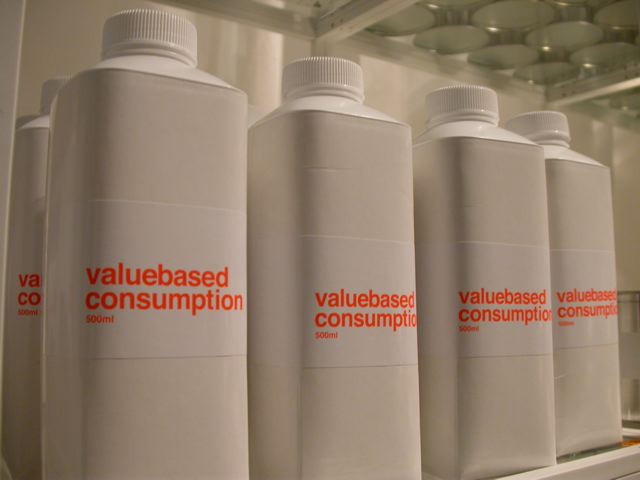
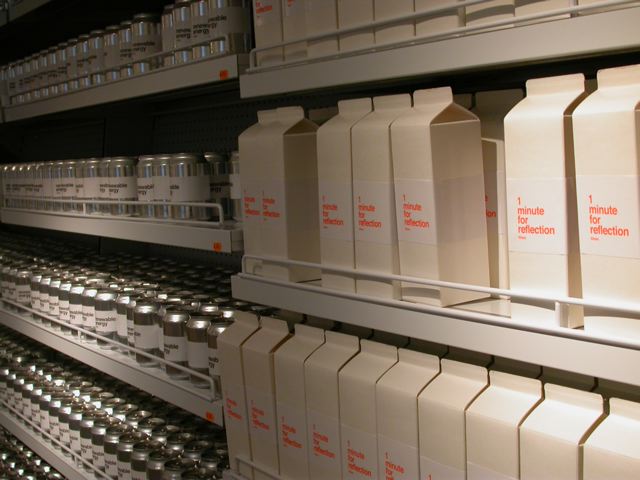
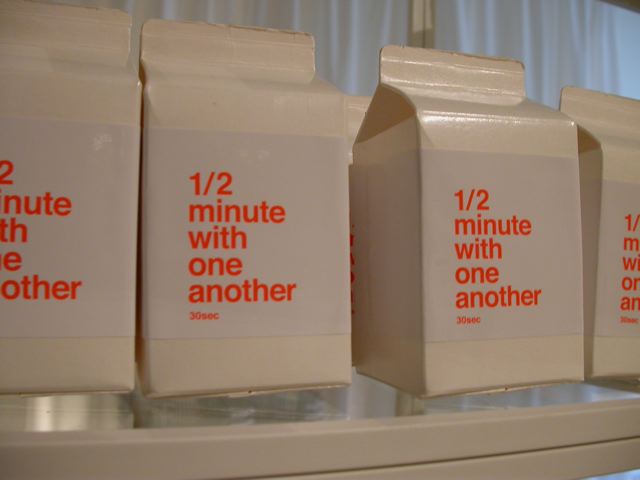
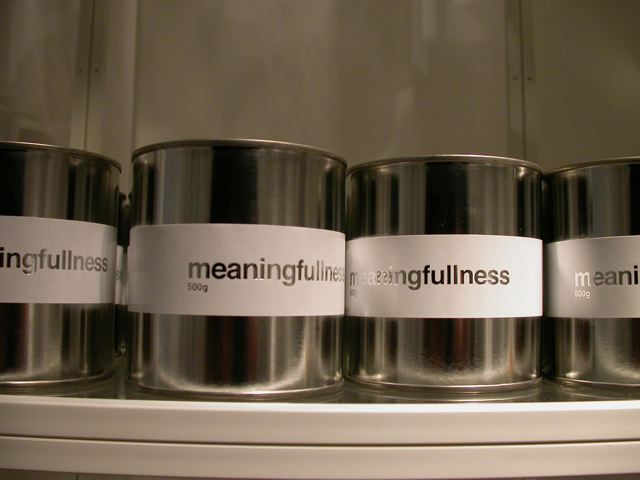
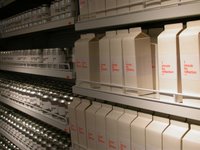
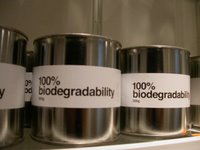
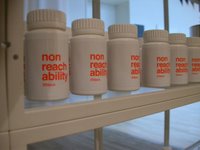
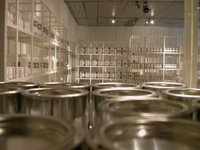
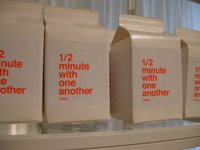
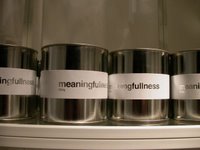
Last September I wandered into the FLOWmarket at the Dansk Design Center in Copenhagen. I was immediatley engaged when I entered the installation. Generic packaging framed phrases that were both poignant and hopeful: a carton of "1/2 minute with one another", 50 pills of "lifestyle related disease killers", a salve of "naturalness", a gallon of "sustainable innovation".
Its designers say, "theFLOWmarket™ is a shop designed to inspire consumers to think, live and consume more holistically," — a call to purchase goods of sustainable value and a critique of our buying habits. 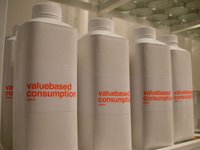 It's the same philosophy that has been a key component to the recent success of the LEED rating system, the about face of Walmart, the waiting list for Prius and the growth of Whole Foods. It's the upside of a free market: competition = wealth. When manufacturers believe they are losing sales they will provide an improved product. These days, that can translate to the production of sustainable goods because that's what we, the consumer, want. We want organic foods. We want alternative energy. We want recyclable goods…
So, does eco-materialism justify our desire? YES. Though there is the risk of deceiving oursleves with a notion that we can procure a bright future, there are purchases we must make on a regular basis, and some are better than others. I'll choose a quart of "renewable" over a gallon of "finite" any day. I believe our particular challenge, and that of our customers, as providers of "sustainable goods", is to avoid the pitfall of opportunism by practicing what we preach and buying what we sell.



Architecture for Humanity, which receives 50% of every sale of REVERB, has been working wonders in post-Katrina Gulf Coast areas. Click here to read the newsletter we received this week.

This week we started a "top secret" project with the San Francisco and Denver offices of Gensler on behalf of the IIDA and ASID for Greenbuild. USGBC tapped us for it based upon our successful NeoCon booth designs that have highlighted design process waste. We asked Melissa Mizell to join us since we're not interior designers (and she wrote the most humorous article for our book so we knew it would be fun). She has been leading the Gensler team and the collaboration has been a blast. The end result will be nothing less than "dynamic"! (inside joke)

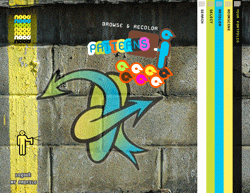
One of our customers, Nood Floorcovering, has launched Nood Lab, its pattern search engine and recoloring tool. Designers can pick patterns and color references, see their choices installed in room scenes using SIM from Tricycle®. And, of course, the site integrates with a print sample order program—so designers can see digital print samples and room scenes of their choices in 48 hours. Three cheers for sustainable sampling!
Our blog is mostly about sustainable design in the interiors industry,
especially carpet. Sometimes it's just about us. Updated when we've got something good to say.
 The human drive for sustainability has a price . . . roughly $2.33 per gallon. Sustainable driving for humans might have a higher price tag, especially if it means the possible re-shuffling of the current transportation payout structure. So investigates a new documentary film titled Who Killed the Electric Car?